Disentis, Graubünden
In the Disentis project, volunteers get a firsthand look at how protective forests are created and maintained. Surrounded by alpine nature, culture, and history, they actively contribute to safety, biodiversity, and open-land management through tree planting and maintenance work.
Forest and cultural landscape
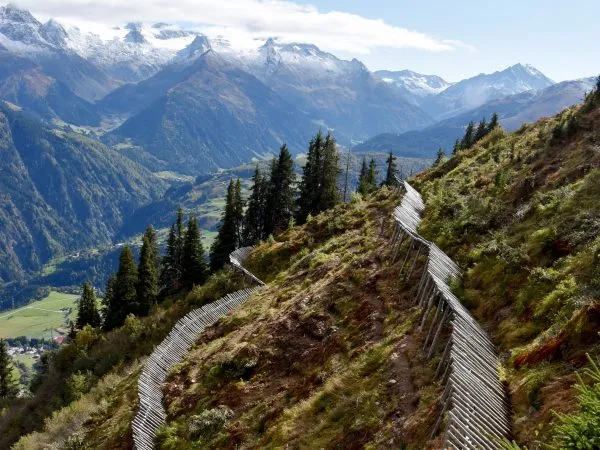
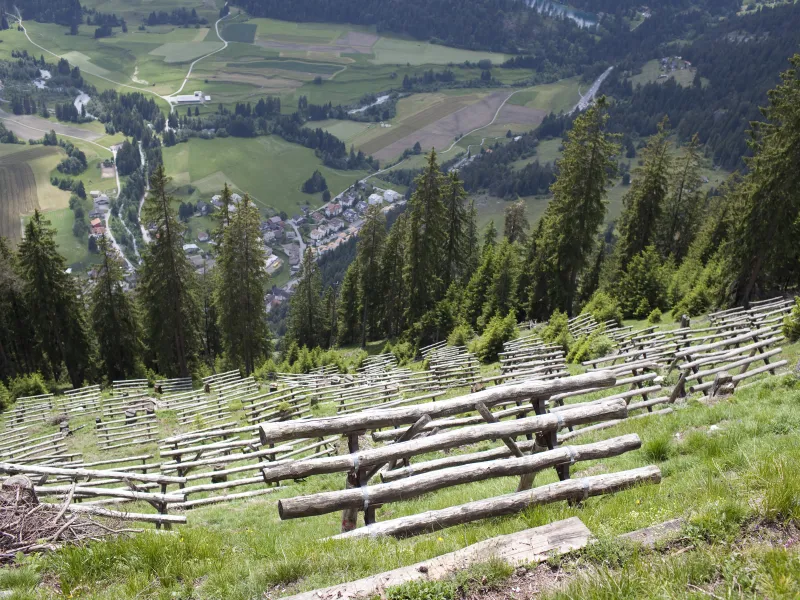
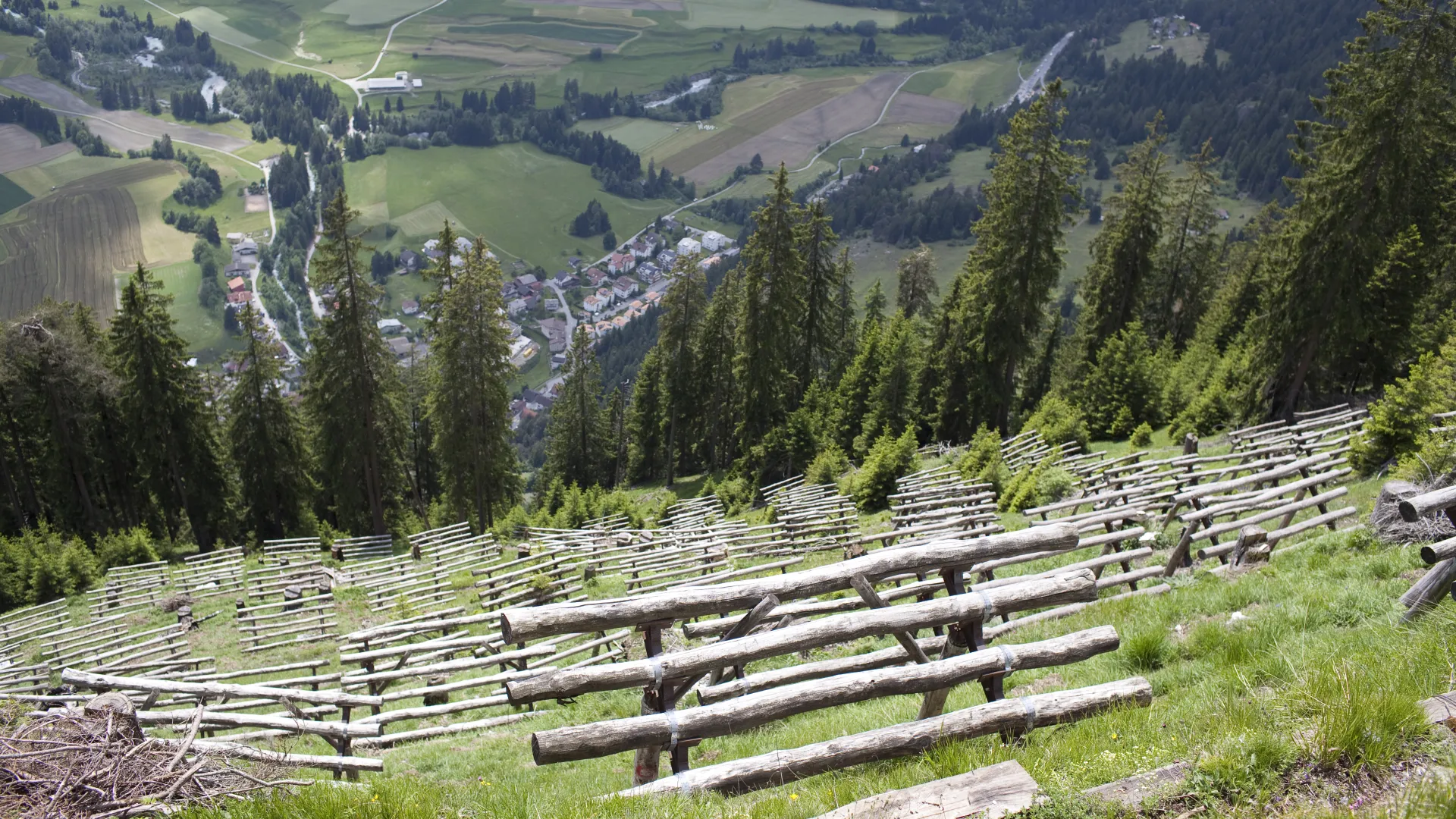
Disentis/Mustér connects the north and south via the Oberalp and Lukmanier Passes. Today, Disentis is a popular tourist destination where history, nature, and alpine landscapes converge. The young Rhine shapes the floodplains at the bottom of the valley, while the municipal area extends up to over 3,000 meters to the glaciers of the Brunnifirn. The forest presents itself as a mosaic of protective woodland and ancient cultural landscapes: spruce dominates, complemented by silver fir, pine, and Swiss stone pine, some of which are 800 years old. Once heavily used, it still bears traces of hard mountain farming. As a result of structural change in the mountain region, many farms and alpine pastures have been abandoned in recent decades, and the vacant land—often rich in biodiversity—is becoming overgrown. Storms and bark beetles require constant maintenance.
Idea and goals
The safety of the population and infrastructure in Disentis depends heavily on the protective forest. Despite tourism and public support, funding is insufficient for comprehensive maintenance. The project in Disentis therefore aims to plant trees at the tree line near existing avalanche barriers. This will create a stable forest over the long term that fulfills a protective function and ensures the long-term safety of the population.
Project partnerships: The project is being carried out in close collaboration with the local forestry office.
What you can expect
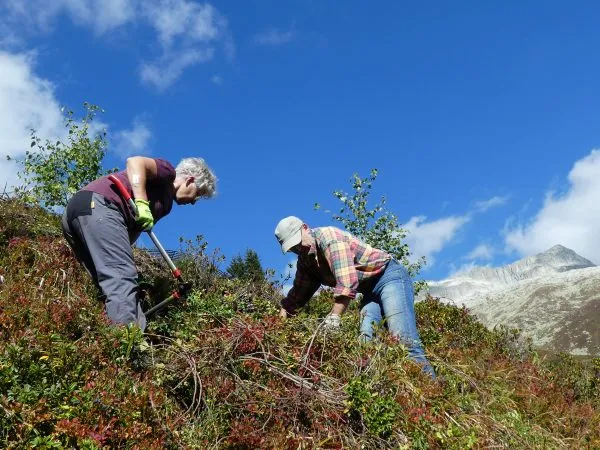
The work is flexibly adapted to current needs as well as weather and terrain conditions and may vary. The focus of the Disentis project is on planting young trees. To improve planting success, terraces—known as berms—are created beforehand. The young trees are tended to. Additionally, walking trails and wildlife fences are built. All work is carried out under the guidance of experienced project and group leaders.
We kick off on Sunday with an introduction to the Mountain Forest Project and the week’s schedule. Each day starts early: breakfast is at 6:30 a.m., followed by work. A highlight is the weekly forestry excursion in the surrounding area. In addition to forestry work, volunteers also take on simple household tasks at the accommodation, such as tidying up or doing the dishes.
Check out more photos from the project!
Organisatorisches
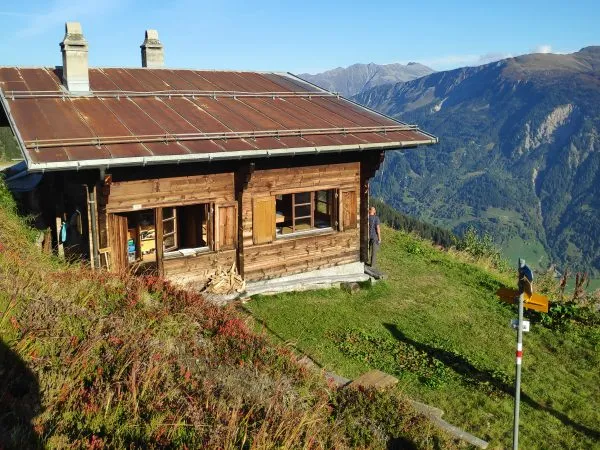
Casa Lavineras, a simple forest cabin at 1,990 meters above sea level
- Dormitory
- Toilet / sink, no shower
- Running cold water
- No electricity
- Camping allowed
Breakfast and dinner at the accommodation, lunch in the forest
- Whole-food
- regional
- seasonal
- organic
- Low meat content (vegetarian alternative available)

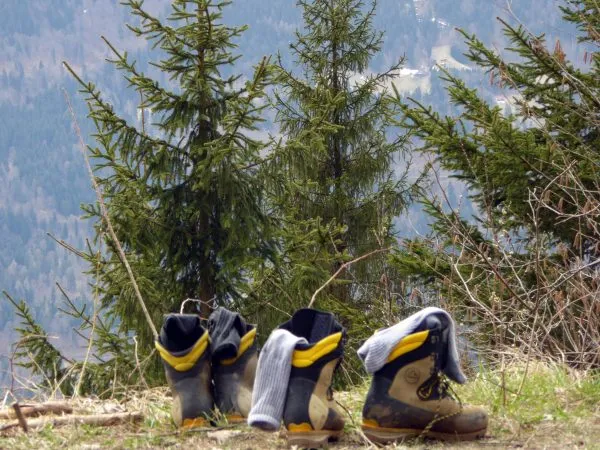
- Sturdy, high-top hiking boots (above the ankle) with a treaded sole (two pairs recommended)
- Work clothes, work gloves
- Rain jacket, rain pants (gaiters recommended)
- Warm clothing (we’ll be in the mountains)
- Slippers
- Headlamp or flashlight
- Sun protection (sunscreen, sunglasses, hat)
- Daypack, pocket knife, water bottle (thermos recommended)
- Hand towel/shower towel
- Personal items
- Warm sleeping bag, pillow if desired, fitted sheet
- Luggage: Travel with a suitcase or bag is possible
- Good physical condition and sure-footedness. The work may take place on steep terrain.
- Please arrive at the meeting point on time. Late arrival or early departure is not permitted.
- Participants must follow the instructions of the project staff.
- Insurance is the responsibility of the participants.
- Photos will be taken during the project week and may be published in our publications. Please contact the project leadership if you do not consent to this.
For environmental reasons, please use public transportation or carpool to get here—parking is not available.
Meeting point: (Only with confirmed registration!)
Sunday, 4:09 p.m., “Disentis/Mustér” train station
From the meeting point, travel directly to the accommodation in Bergwaldprojekt vehicles
Departure: Saturday, 11:00 a.m. from the meeting point.
Registration is binding. If you are unable to attend, please cancel your registration immediately by calling +41 (0)81 650 40 40 or emailing info@bergwaldprojekt.ch. We will be available on
the day of arrival in case of emergencies. The relevant phone number will be posted in the project information section of your profile shortly before the project begins.